
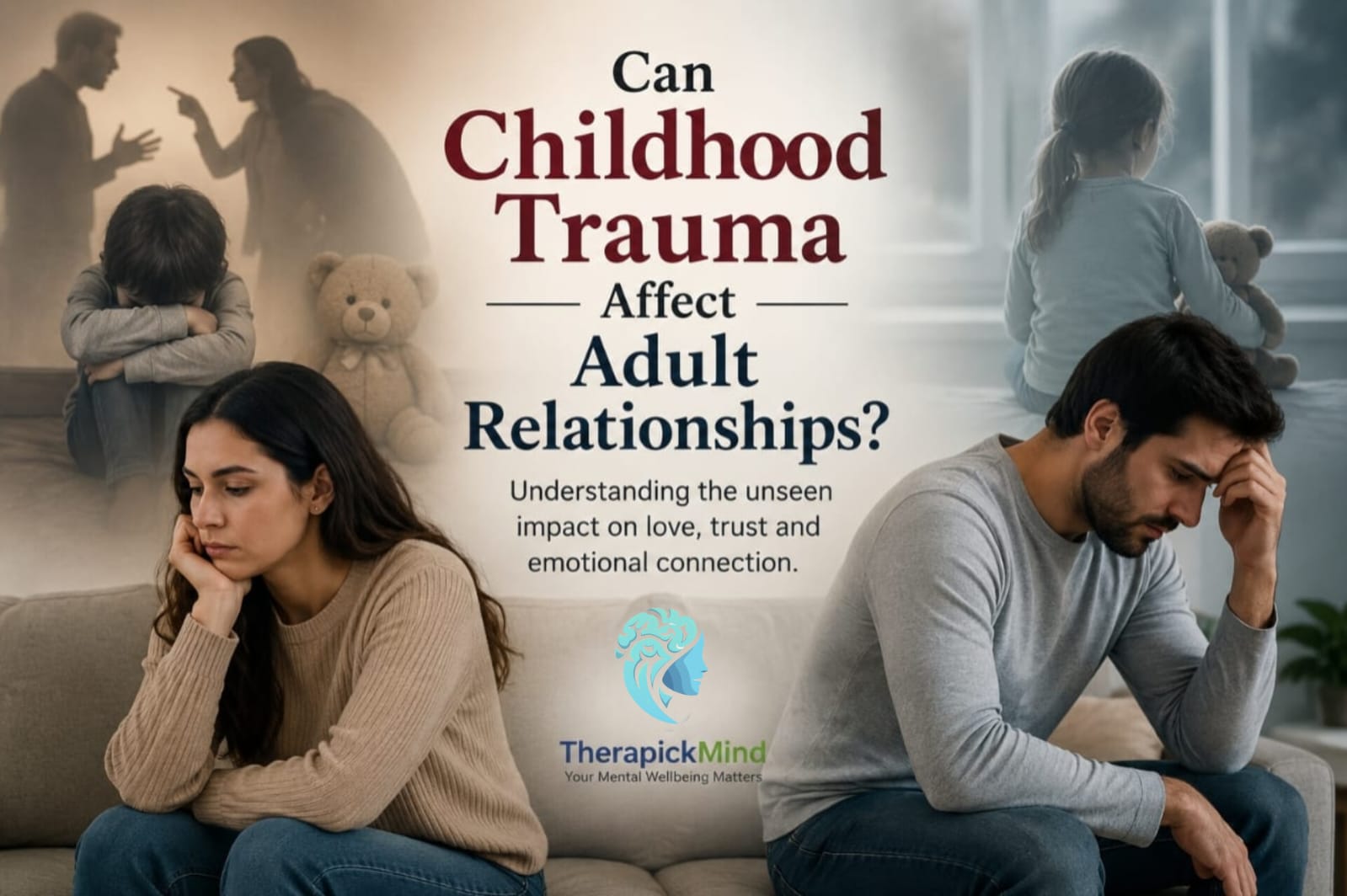
Can Childhood Trauma Affect Adult Relationships?
Many adults struggle with trust issues, fear of abandonment, emotional numbness, or unhealthy relationship patterns without realizing that the roots may lie in childhood experiences. Childhood trauma does not always involve severe abuse or violence. Sometimes emotional neglect, criticism, rejection, unstable parenting, bullying, or growing up in a stressful environment can leave lasting emotional wounds.
These early experiences shape how individuals see themselves, others, and relationships throughout life.
What Is Childhood Trauma?
Childhood trauma refers to emotionally painful or distressing experiences during childhood that overwhelm a child’s ability to cope. These experiences may include:
- Emotional neglect
- Physical or emotional abuse
- Domestic violence
- Bullying
- Loss of a parent
- Constant criticism
- Lack of emotional support
- Unpredictable family environments
Children learn emotional safety through their caregivers. When safety, validation, or affection are inconsistent, the child may develop unhealthy emotional coping patterns that continue into adulthood.
How Childhood Trauma Affects Adult Relationships
1. Difficulty Trusting Others
Individuals who experienced betrayal, neglect, or emotional inconsistency in childhood may struggle to trust partners in adulthood. They may constantly fear being hurt, abandoned, or rejected.
This can lead to:
- Overthinking
- Jealousy
- Emotional distancing
- Fear of commitment
Even healthy relationships may feel emotionally unsafe to them.
2. Fear of Abandonment
People with childhood trauma often become highly sensitive to rejection. Small misunderstandings, delayed replies, or emotional distance from a partner may trigger intense anxiety.
They may:
- Become emotionally dependent
- Seek constant reassurance
- Fear being left alone
- Stay in unhealthy relationships to avoid abandonment
3. Emotional Numbness
Some individuals cope with childhood trauma by suppressing emotions. As adults, they may appear emotionally detached or struggle to express affection, vulnerability, or emotional intimacy.
Partners may misunderstand this behavior as lack of love or care, while internally the person may simply fear emotional closeness.
4. Repeating Toxic Relationship Patterns
People often unconsciously recreate familiar emotional environments from childhood. If chaos, criticism, or emotional pain felt “normal” growing up, they may unintentionally choose unhealthy relationships in adulthood.
This cycle can include:
- Toxic attachment
- Emotional dependency
- Manipulation
- Poor boundaries
- Attraction toward emotionally unavailable partners
5. Low Self-Esteem and Self-Worth
Children who grow up feeling unwanted, criticized, or ignored may develop negative beliefs such as:
- “I am not good enough.”
- “I don’t deserve love.”
- “People will eventually leave me.”
These beliefs can affect communication, confidence, and relationship stability.
Signs That Childhood Trauma May Be Affecting Your Relationship
You may notice:
- Difficulty expressing emotions
- Fear of intimacy
- Overreacting during conflicts
- Constant need for reassurance
- Anxiety in relationships
- Avoiding emotional closeness
- Feeling emotionally drained
- Trust issues despite no evidence
- Self-sabotaging healthy relationships
Recognizing these patterns is the first step toward healing.
Can Therapy Help?
Yes. Therapy can help individuals understand how childhood experiences influence current emotional patterns and relationships.
Approaches like:
- Cognitive Behavioral Therapy (CBT)
- Trauma-informed counseling
- Attachment-focused therapy
- Mindfulness-based interventions
can help individuals:
- Develop emotional awareness
- Improve communication
- Build healthy boundaries
- Heal unresolved emotional pain
- Increase self-worth
- Form healthier relationships
Healing is possible when emotional wounds are acknowledged instead of ignored.
Healthy Relationship Healing Starts with Self-Awareness
Many people blame themselves for relationship difficulties without understanding the emotional impact of childhood experiences. Trauma responses are not personality flaws; they are survival patterns developed during difficult emotional situations.
With emotional support, self-awareness, and therapy, individuals can gradually learn to trust, communicate, and connect in healthier ways.
Healing childhood trauma does not erase the past, but it can change how the past affects your present relationships.
Counsellor's note:
Childhood trauma can significantly affect adult relationships by influencing emotional attachment, trust, communication, and self-esteem. Unresolved emotional wounds may lead to unhealthy patterns, fear of intimacy, or emotional distress in relationships.
However, awareness and therapy can help individuals break these cycles and build emotionally healthy, meaningful relationships. Seeking help is not weakness — it is an important step toward emotional healing and personal growth.
If you or someone you know is struggling emotionally, professional psychological support can make a meaningful difference.
This blog was written by Mahammad Irshad, Psychologist and Founder of TherapickMind