
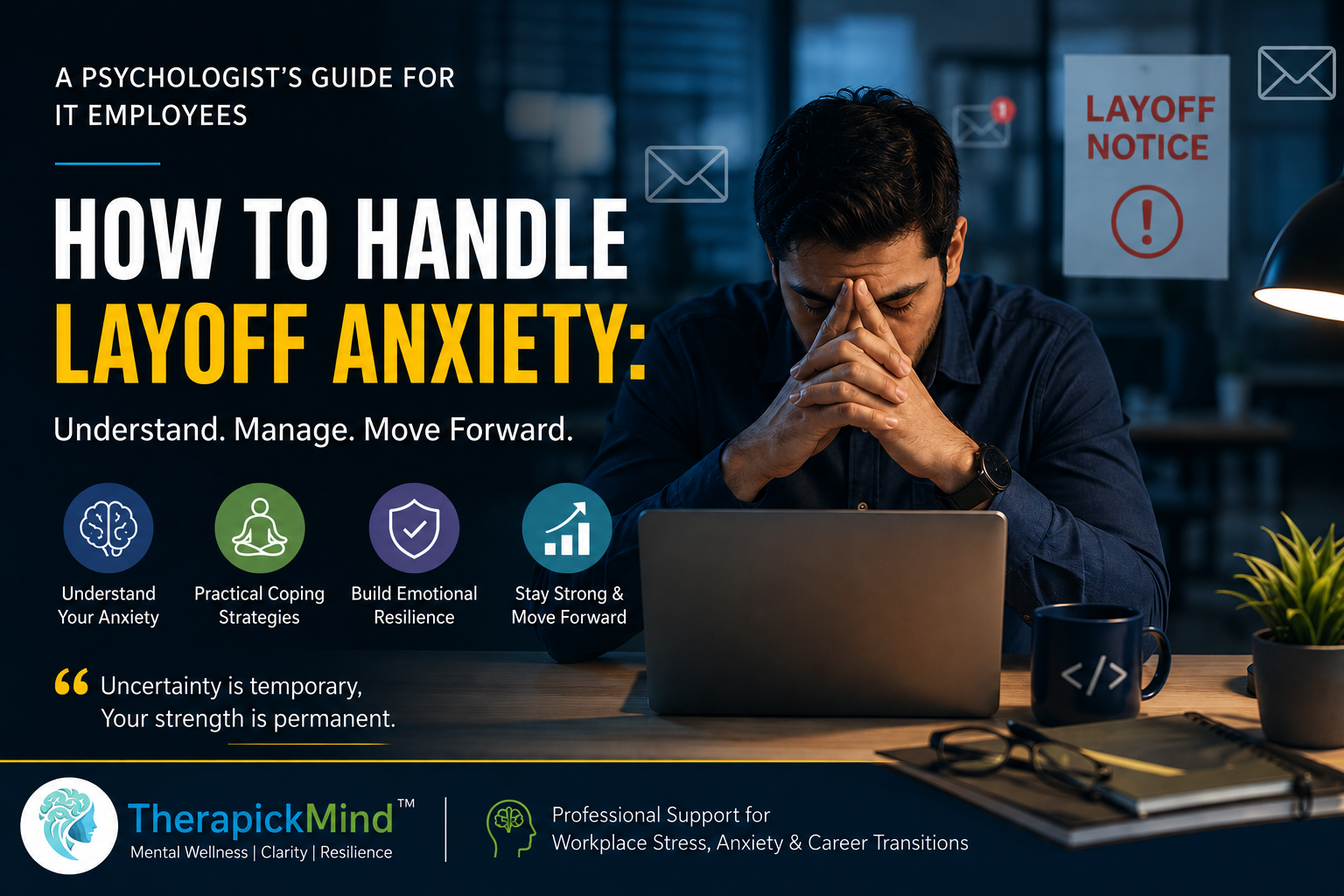
How to Handle Layoff Anxiety: A Psychologist’s Guide for IT Employees
The IT industry is going through rapid changes. Layoffs, restructuring, performance pressure, and job uncertainty have become common concerns for many professionals. Even highly skilled employees with years of experience are finding themselves emotionally overwhelmed by the fear of losing their jobs.
For many IT employees, a job is not only a source of income — it is also connected to identity, self-esteem, lifestyle, family responsibilities, and future goals. When layoffs happen or when there is constant fear about job security, it can significantly affect mental health.
As a psychologist, I have observed that many professionals silently struggle with anxiety, emotional exhaustion, overthinking, sleep disturbances, panic symptoms, and self-doubt during periods of workplace uncertainty.
This article will help you understand layoff anxiety and provide practical psychological strategies to cope with it in a healthier way.
What Is Layoff Anxiety?
Layoff anxiety refers to the persistent fear, stress, and emotional distress related to losing one’s job or facing uncertainty at work. This anxiety may begin even before layoffs actually happen.
Employees may constantly think:
- “What if I lose my job?”
- “How will I manage financially?”
- “Will I get another opportunity?”
- “Am I becoming replaceable?”
- “Why is management behaving differently?”
When these thoughts become repetitive, they can create chronic stress and emotional exhaustion.
Common Signs of Layoff Anxiety
Many IT employees ignore early emotional warning signs because they believe stress is “normal” in the corporate environment. However, unmanaged stress can gradually affect mental and physical wellbeing.
Some common symptoms include:
- Constant overthinking
- Difficulty sleeping
- Fear about the future
- Reduced concentration
- Irritability
- Emotional numbness
- Panic symptoms
- Low confidence
- Feeling mentally exhausted
- Avoiding team interactions
- Checking emails or messages repeatedly with fear
Some individuals may also experience physical symptoms such as headaches, chest tightness, body pain, fatigue, digestive discomfort, or increased heart rate.
Why Layoffs Affect Mental Health Deeply
Job loss or fear of layoffs affects more than financial stability. It can impact a person’s emotional identity.
Many employees spend years building careers, working overtime, sacrificing personal time, and staying loyal to organizations. When uncertainty arises, individuals may feel emotionally hurt, rejected, or unappreciated.
Psychologically, layoffs can trigger:
- Fear of failure
- Loss of control
- Shame and embarrassment
- Social comparison
- Reduced self-worth
- Anxiety about family responsibilities
- Hopelessness about the future
For some individuals, workplace stress may also activate older emotional wounds related to insecurity, criticism, or fear of rejection.
How to Manage Layoff Anxiety in a Healthy Way
1. Separate Your Identity From Your Job
One of the most important psychological steps is understanding that your worth is not limited to your job title.
Losing a position does not mean losing your intelligence, skills, experience, or value as a person.
Your profession is only one part of your identity — not your entire identity.
2. Limit Catastrophic Thinking
During uncertainty, the mind often imagines worst-case scenarios repeatedly.
Examples:
- “My life is over.”
- “I will never recover.”
- “Everyone else is doing better.”
- “I’m a failure.”
These thoughts increase anxiety and emotional exhaustion.
Instead, try asking:
- “What evidence supports this thought?”
- “Am I predicting the future?”
- “What are realistic possibilities?”
- “Have I handled difficulties before?”
This cognitive restructuring technique is commonly used in Cognitive Behavioral Therapy (CBT).
3. Maintain a Structured Routine
When anxiety increases, daily routines often collapse. People may sleep irregularly, avoid exercise, isolate socially, or spend excessive time scrolling through negative news.
Maintaining structure helps stabilize the nervous system.
Try to maintain:
- Regular sleep timing
- Daily movement or exercise
- Healthy meals
- Skill-building activities
- Social connection
- Breaks from screens
Even small routines can improve emotional regulation.
4. Reduce Constant Exposure to Negative News
Continuous exposure to layoff discussions, LinkedIn comparisons, workplace gossip, and negative news can intensify anxiety.
Stay informed, but avoid consuming fear-based content throughout the day.
Protecting your mental environment is important.
5. Focus on What You Can Control
Uncertainty becomes more manageable when attention shifts toward controllable actions.
Examples include:
- Updating your resume
- Learning new skills
- Networking professionally
- Improving interview preparation
- Building financial planning
- Practicing emotional self-care
Taking action reduces helplessness.
6. Talk About Your Emotions
Many professionals suppress emotions because they fear appearing weak.
However, emotional suppression can increase stress internally.
Speaking with trusted friends, family members, mentors, or mental health professionals can reduce emotional burden and improve clarity.
Seeking psychological support is not weakness — it is emotional responsibility.
When to Seek Professional Help
Consider professional mental health support if you experience:
- Persistent anxiety
- Panic attacks
- Severe sleep disturbance
- Emotional breakdowns
- Loss of motivation
- Hopelessness
- Suicidal thoughts
- Inability to function daily
- Increased anger or emotional numbness
Therapy can help individuals process emotions, develop coping strategies, rebuild confidence, and improve resilience during career transitions.
Final Thoughts
Layoff anxiety is becoming increasingly common among IT employees, especially in today’s uncertain work environment. Fear about the future can feel emotionally exhausting, but it is important to remember that difficult phases do not define your entire life journey.
Professional setbacks, organizational changes, or layoffs do not reduce your human value.
Mental health deserves attention just as much as career growth.
By understanding stress responses, maintaining emotional balance, seeking support when needed, and focusing on healthy coping strategies, individuals can gradually rebuild confidence and move forward with resilience.
If workplace stress, burnout, or job uncertainty are affecting your emotional wellbeing, professional psychological support may help you navigate these challenges more effectively.
This blog is written by Mahammad Irshad, Consultant Psychologist, Founder of TherapickMind.