
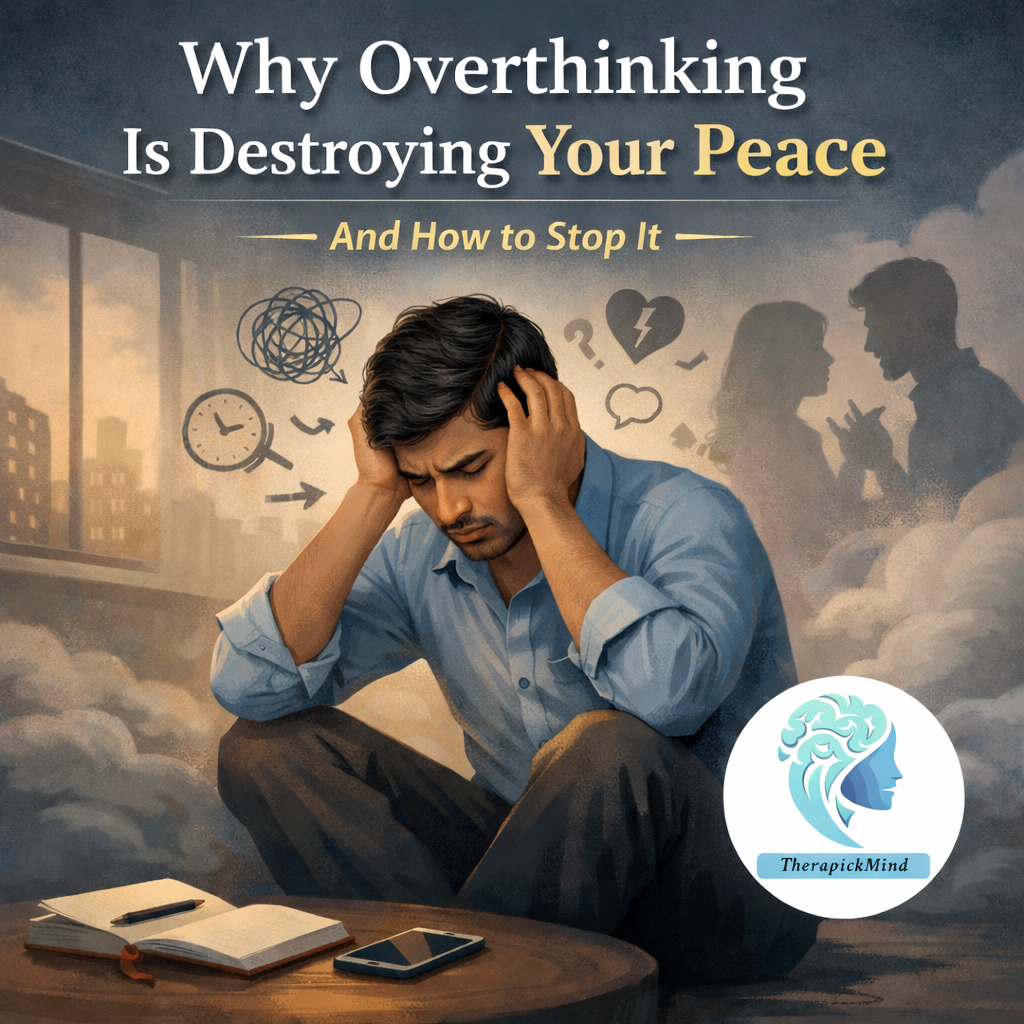
Overthinking is one of the most common mental health concerns today, especially among young adults and working professionals in India. What starts as simple worry slowly turns into a constant loop of thoughts that affects sleep, relationships, decision-making, and emotional well-being.
If you often find yourself stuck in “what if” scenarios, replaying past conversations, or fearing future problems that haven’t even happened — you are not alone.
Overthinking is not just thinking too much. It is a pattern where your mind refuses to rest, constantly searching for control, certainty, or reassurance.
The Problem
Overthinking creates mental exhaustion. People who struggle with it often experience:
- Constant worry about the future
- Replaying past mistakes repeatedly
- Fear of making wrong decisions
- Difficulty concentrating
- Sleep disturbances
- Increased anxiety and irritability
In many cases, overthinking leads to anxiety disorders, relationship conflicts, and low self-confidence. It also prevents individuals from enjoying the present moment.
Causes of Overthinking
Overthinking does not happen randomly. It is usually rooted in deeper psychological patterns:
1. Anxiety and Fear of Uncertainty
When the brain tries to predict and control the future, it keeps generating endless possibilities — most of them negative.
2. Past Emotional Experiences
Childhood trauma, criticism, or unstable environments can make a person hyper-alert and mentally overactive.
3. Perfectionism
The need to make the “perfect” decision leads to analysis paralysis.
4. Relationship Insecurity
Overthinking is very common in relationships — checking messages, doubting intentions, and imagining conflicts.
5. Lack of Emotional Regulation Skills
Many people were never taught how to process emotions, so they overthink instead of feeling and resolving them.
Solutions: How to Stop Overthinking
Breaking the cycle of overthinking requires awareness and consistent practice. Here are evidence-based strategies:
1. Identify Thought Patterns
Notice when your mind starts spiraling. Ask yourself: “Is this thought helpful or harmful?”
2. Set a ‘Worry Time’
Allocate 15–20 minutes daily to consciously think about your worries. Outside that time, redirect your mind.
3. Ground Yourself in the Present
Practice techniques like deep breathing, mindfulness, or focusing on your surroundings.
4. Challenge Negative Thoughts
Replace assumptions with facts. For example, instead of “Something will go wrong,” ask “What evidence do I have?”
5. Limit Reassurance Seeking
Constantly checking or asking others for reassurance strengthens overthinking.
6. Engage in Physical Activity
Walking, exercise, or even simple movement helps reduce mental loops.
7. Seek Professional Help
Therapies like Cognitive Behavioral Therapy (CBT) are highly effective in managing overthinking and anxiety.
When to Seek Help
You should consider professional support if:
- Overthinking is affecting your sleep or daily functioning
- You feel constantly anxious or restless
- It is impacting your relationship or work
- You are unable to control negative thoughts
Early intervention can prevent long-term mental health issues and improve overall quality of life.
Overthinking is not a weakness — it is a learned mental habit. With the right strategies and support, it can be unlearned.
At TherapickMind, we provide structured counselling and therapy to help you regain control over your thoughts and emotions.
Book a session at TherapickMind and take the first step towards a calmer, healthier mind.