
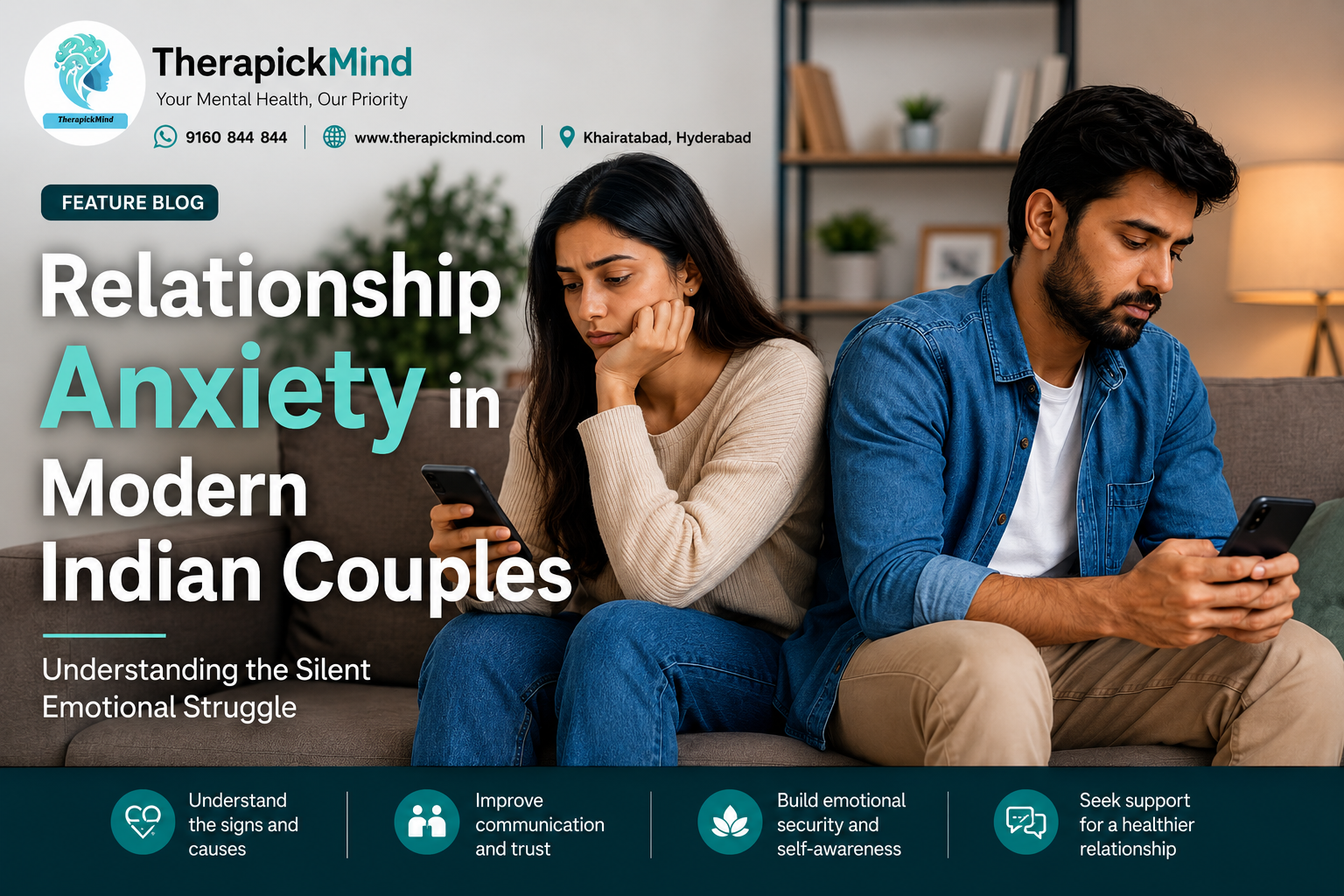
Relationship Anxiety in Modern Indian Couples: Understanding the Silent Emotional Struggle
In today’s fast-paced world, relationships are evolving rapidly. Modern Indian couples are experiencing emotional challenges that previous generations rarely discussed openly. One of the most common yet unnoticed issues is relationship anxiety. Many individuals deeply care about their partners but constantly fear rejection, abandonment, betrayal, or emotional disconnection.
Relationship anxiety does not always mean the relationship is unhealthy. Sometimes, it reflects emotional insecurity, past experiences, stress, or unrealistic expectations. With increasing social media influence, career pressure, and changing relationship dynamics, many couples today struggle silently with emotional overthinking and attachment-related worries.
What is Relationship Anxiety?
Relationship anxiety refers to persistent fear, doubt, or insecurity within a romantic relationship. A person may constantly question:
- “Does my partner truly love me?”
- “What if they leave me?”
- “Am I good enough?”
- “Why are they not replying quickly?”
These thoughts may create emotional stress even when the relationship is stable.
Common Signs of Relationship Anxiety
Modern couples may experience:
- Overthinking small relationship issues
- Constant need for reassurance
- Fear of abandonment
- Jealousy and insecurity
- Emotional dependency
- Difficulty trusting partner
- Checking messages or social media repeatedly
- Anxiety when communication reduces
- Fear during conflicts or arguments
Sometimes, individuals become emotionally exhausted because they continuously analyze their partner’s behavior.
Why is Relationship Anxiety Increasing in India?
1. Social Media Comparisons
Social media creates unrealistic expectations about love and relationships. Couples compare their relationship with edited online lifestyles, leading to dissatisfaction and insecurity.
2. Fear of Emotional Rejection
Many individuals carry emotional wounds from previous relationships, childhood experiences, or attachment difficulties. These experiences may increase fear of rejection in current relationships.
3. Career and Financial Stress
Modern couples balance careers, studies, family expectations, and future planning. Stress from work and financial instability often affects emotional intimacy.
4. Communication Gaps
Busy schedules and digital communication sometimes reduce emotional connection. Misunderstandings increase when couples avoid healthy conversations.
5. Changing Relationship Expectations
Modern relationships involve emotional companionship, independence, career goals, and mutual understanding. Managing all these expectations can become emotionally overwhelming.
Psychological Impact of Relationship Anxiety
If ignored for a long time, relationship anxiety may contribute to:
- Stress and emotional exhaustion
- Sleep disturbances
- Low self-esteem
- Depression symptoms
- Excessive attachment
- Frequent conflicts
- Emotional burnout
Sometimes people begin to lose their individual identity while trying to “save” the relationship constantly.
Healthy Ways to Manage Relationship Anxiety
Practice Open Communication
Healthy communication reduces assumptions and misunderstandings. Expressing emotions calmly helps partners understand each other better.
Avoid Overanalyzing
Not every delayed reply or mood change indicates rejection. Learning emotional balance is important.
Build Self-Confidence
A healthy relationship grows stronger when both individuals maintain personal identity, confidence, hobbies, and emotional independence.
Limit Social Media Comparisons
Every relationship is unique. Comparing relationships online often creates unnecessary emotional pressure.
Understand Attachment Patterns
Awareness about attachment styles and emotional triggers helps individuals recognize their relationship behaviors more clearly.
Seek Professional Support
Counselling and therapy can help couples understand emotional patterns, improve communication, and manage insecurity effectively. Approaches like Cognitive Behavioral Therapy (CBT) and supportive counselling are helpful in addressing relationship anxiety.
Final Thoughts
Relationship anxiety is more common than many people realize, especially among modern Indian couples facing emotional, social, and professional pressures. Feeling anxious in relationships does not make someone weak or “too emotional.” It simply indicates the need for emotional understanding, communication, and self-awareness.
Healthy relationships are not built on perfection but on trust, empathy, emotional safety, and mutual growth. Recognizing relationship anxiety early and seeking support when needed can help couples create stronger and healthier emotional connections.
At TherapickMind, we believe emotional wellbeing is an essential part of healthy relationships. Psychological support and counselling can help individuals and couples better understand themselves and strengthen their emotional resilience.