
TherapickMind™
School Refusal in Children: Causes, Warning Signs, and How Parents Can Help
19 Mar 2026
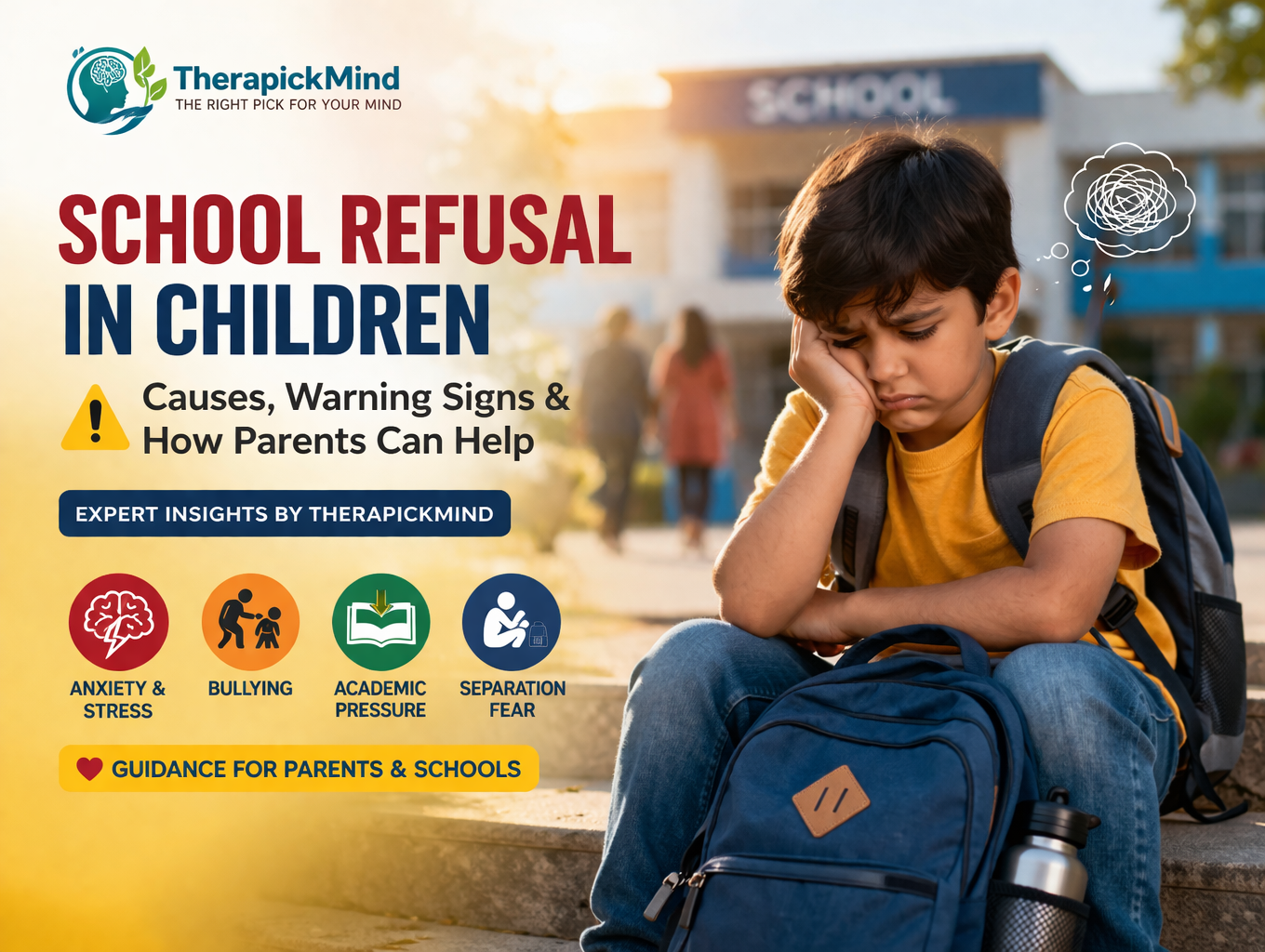
Introduction
In recent years, many parents and teachers have observed a growing concern—children refusing to attend school. This is not mere stubbornness or laziness; in many cases, it reflects deeper emotional or psychological distress. Understanding school refusal is essential to provide timely support and prevent long-term academic and emotional difficulties.
What is School Refusal?
School refusal refers to a child’s persistent difficulty in attending school due to emotional distress. Unlike truancy, where a child deliberately skips school without parental knowledge, children with school refusal often want to attend but feel unable due to anxiety or fear.
Psychological Causes of School Refusal
School refusal is often linked to underlying emotional challenges, such as:
- Separation Anxiety: Fear of being away from parents or caregivers
- Social Anxiety: Difficulty interacting with peers or fear of judgment
- Bullying or Peer Issues: Negative school experiences
- Academic Pressure: Fear of failure or poor performance
- Adjustment Issues: Difficulty adapting to new schools or environments
These factors may act individually or in combination, making it important to assess each child holistically.
Warning Signs to Look For
Early identification can help prevent escalation. Parents and teachers should watch for:
- Frequent complaints of headaches or stomach aches before school
- Crying, tantrums, or panic during school time
- Sleep disturbances or nightmares
- Excessive clinginess to parents
- Decline in academic performance
- Avoidance behaviors or excuses to skip school
These signs often indicate emotional distress rather than physical illness.
How Parents Can Help
Parents play a crucial role in supporting children through school refusal. Some effective strategies include:
- Open Communication: Encourage children to express their fears without judgment
- Establish Routine: Maintain consistent sleep and school schedules
- Gradual Exposure: Slowly reintroduce school attendance
- Positive Reinforcement: Appreciate small efforts and progress
- Avoid Reinforcing Avoidance: Do not allow excessive comfort at home during school hours
Role of Schools and Counsellors
Schools must create a safe and supportive environment. Collaboration between parents, teachers, and counsellors is essential.
- Provide emotional support within the classroom
- Address bullying or peer issues promptly
- Offer flexible academic support when needed
- Involve school counsellors for structured interventions
At TherapickMind, we work closely with schools to implement child-centered counselling approaches and supportive programs.
When to Seek Professional Help
If school refusal persists for more than a few weeks or significantly affects daily functioning, professional intervention is necessary. Early counselling can help identify root causes and develop coping strategies for both children and parents.
Conclusion
School refusal is not a behavioral problem but a signal of underlying emotional needs. With timely understanding, structured support, and professional guidance, children can overcome these challenges and regain confidence in their academic journey.
Call to Action
If your child is experiencing school refusal or emotional distress, TherapickMind offers professional counselling and school support programs tailored to children and families.

Mahammad Irshad
Mahammad Irshad is a Consultant Psychologist, Assistant Professor, expertise in child and adolescent mental health. He is the founder of TherapickMind, providing evidence-based counselling and psychological services for individuals, children, and families.
Related Blogs
No related blogs available.