
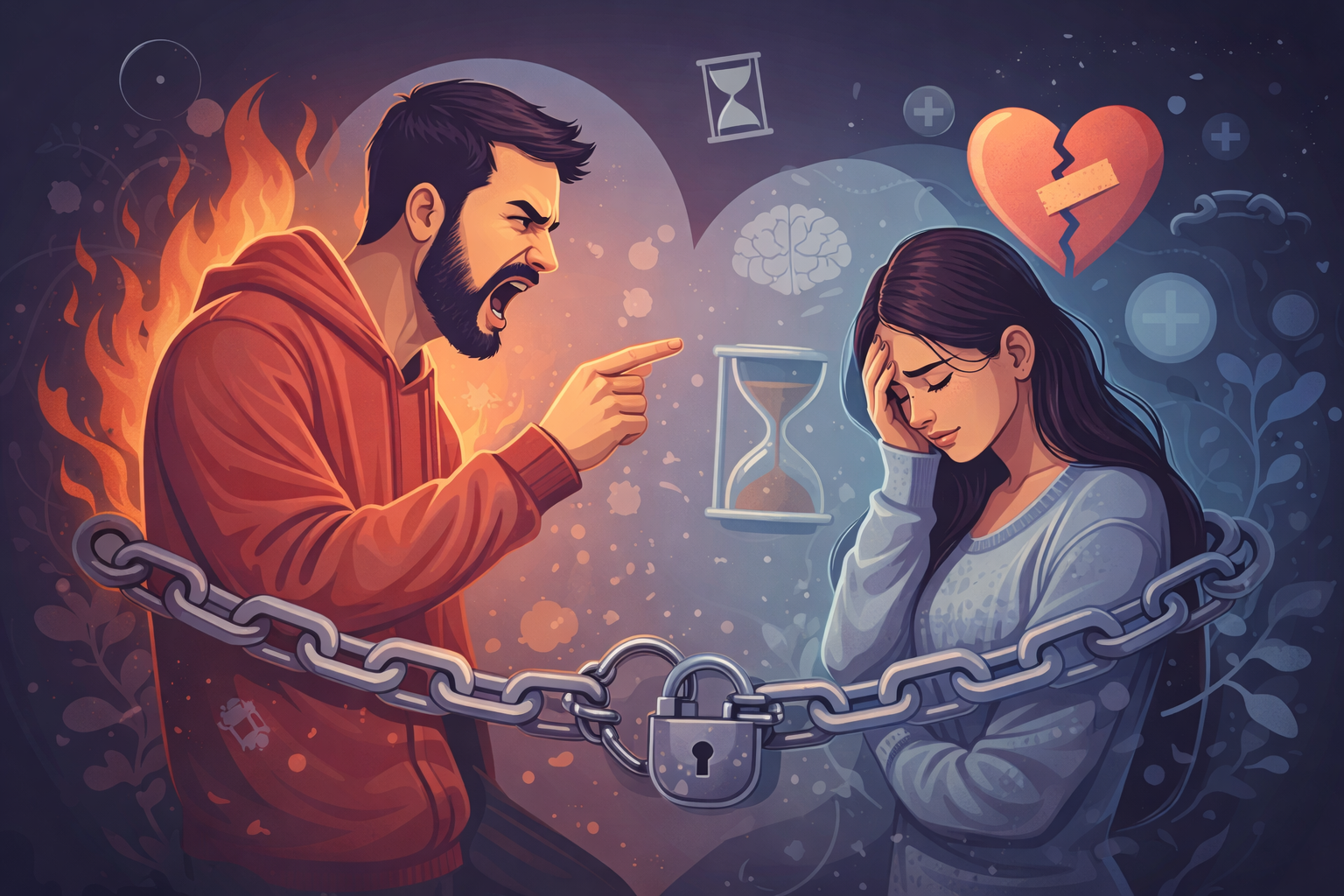
Signs of Trauma Bonding
Trauma bonding is a psychological phenomenon where a person forms a strong emotional attachment to someone who repeatedly hurts, manipulates, or mistreats them. Despite experiencing emotional pain, the individual finds it extremely difficult to leave the relationship.
Trauma bonding often develops in relationships where cycles of abuse and affection occur repeatedly. The moments of kindness or apology create hope, while the hurtful behaviors create confusion and emotional dependence.
Understanding the signs of trauma bonding can help individuals recognize unhealthy relationship patterns and seek support.
1. Difficulty Leaving the Relationship
One of the most common signs of trauma bonding is the inability to leave the relationship, even when the person clearly recognizes that the relationship is unhealthy or harmful.
Individuals may repeatedly attempt to leave but find themselves returning due to emotional attachment, guilt, or hope that the partner will change.
2. Justifying Hurtful Behavior
People experiencing trauma bonding often defend or rationalize their partner’s behavior. They may say things such as:
- “He/she didn’t mean to hurt me.”
- “He/she is just going through a difficult time.”
- “He/she loves me deep down.”
This justification reduces the perceived severity of the mistreatment.
3. Emotional Dependence
Trauma bonds create intense emotional dependence. The person may feel that their partner is the only one who truly understands them, even if the relationship causes emotional distress.
This dependence can make separation feel extremely painful or frightening.
4. Repeated Cycles of Conflict and Reconciliation
Trauma bonding usually involves repeated cycles:
Conflict or emotional harm
↓
Apology or affection
↓
Temporary improvement
↓
Conflict again
The periods of kindness create hope that the relationship will improve, strengthening the emotional bond.
5. Isolation from Others
In many trauma-bonded relationships, the individual gradually becomes isolated from friends, family, or supportive networks. This isolation can make the person more dependent on the partner for emotional support.
6. Blaming Oneself for the Problems
Individuals experiencing trauma bonding often believe that they are responsible for the relationship problems. They may feel that if they behaved differently, the partner would stop hurting them.
This self-blame can maintain the cycle of emotional attachment.
7. Feeling Addicted to the Relationship
Some individuals describe trauma bonding as feeling similar to an addiction. Even when the relationship causes distress, they feel compelled to return to the partner.
This happens because the brain becomes conditioned to the cycle of emotional highs and lows.
Why Trauma Bonding Happens
Trauma bonding is influenced by several psychological factors, including:
- Emotional vulnerability
- Fear of abandonment
- Low self-esteem
- Intermittent reinforcement (alternating kindness and harm)
These factors can create a powerful emotional attachment that is difficult to break without awareness and support.
Breaking the Cycle of Trauma Bonding
Breaking trauma bonds requires time, self-awareness, and often professional support. Some helpful steps include:
- Recognizing unhealthy patterns in the relationship
- Rebuilding connections with supportive friends or family
- Strengthening personal boundaries
- Seeking professional counselling or therapy
Therapy can help individuals understand emotional patterns and develop healthier relationship choices.
When to Seek Professional Help
If you feel emotionally trapped in a relationship that repeatedly causes distress, speaking with a mental health professional can help you gain clarity and support.
Professional counselling can assist individuals in understanding trauma bonds, rebuilding self-esteem, and developing healthier relationship dynamics.
Conclusion
Trauma bonding can create powerful emotional attachments that make leaving harmful relationships extremely difficult. Recognizing the signs is an important first step toward healing and creating healthier connections.
With the right support and self-awareness, individuals can break free from trauma bonds and build relationships based on respect, trust, and emotional safety.
Need Support?
If you are experiencing emotional distress or relationship difficulties, professional support can help.
You can book a counselling session with TherapickMind to explore your concerns and begin your journey toward emotional wellbeing.
Visit: