
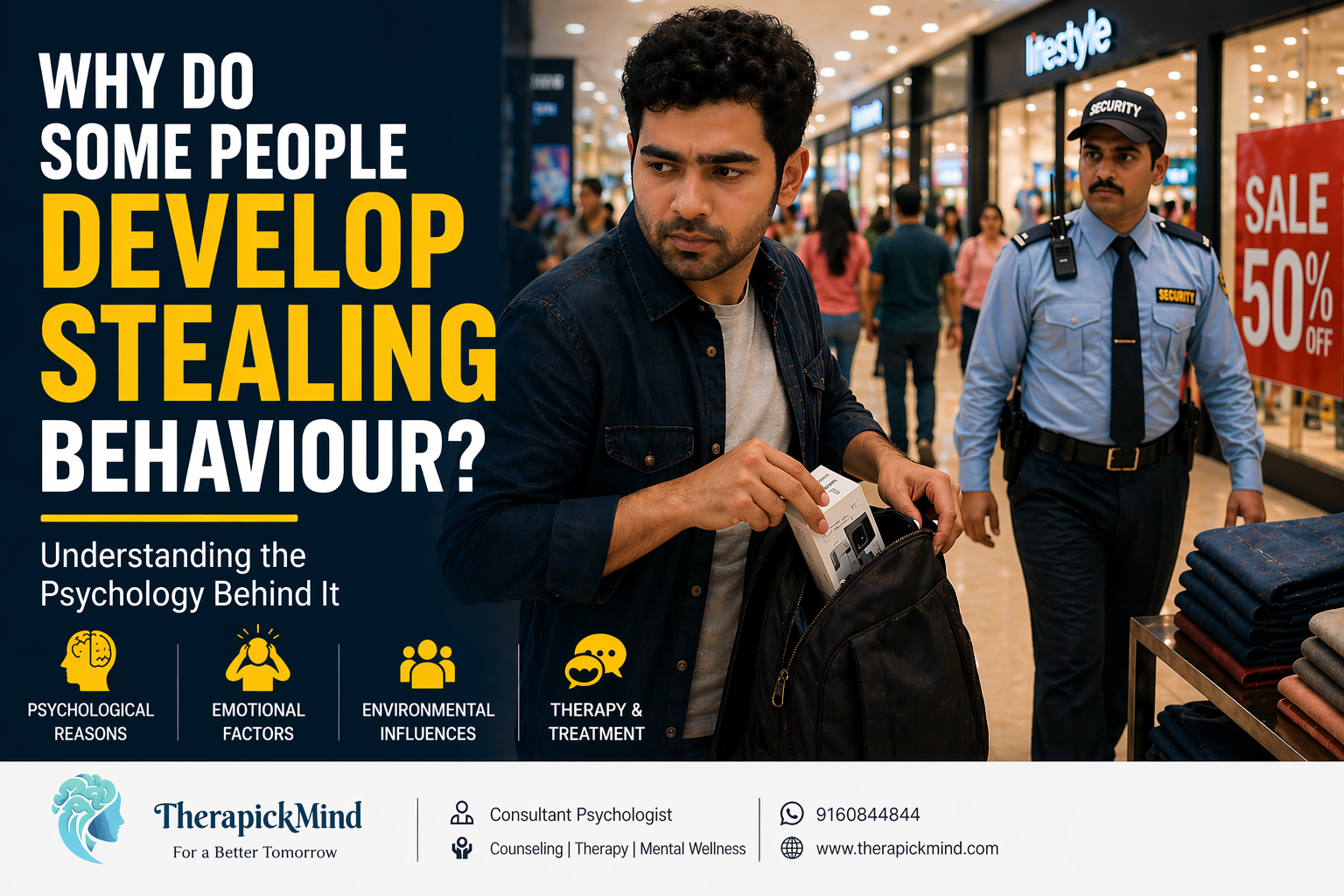
Why Do Some People Develop Stealing Behaviour? (Understanding the Psychology Behind It)
Stealing is often viewed simply as a moral failure or criminal act. However, from a psychological perspective, stealing behaviour can have multiple underlying causes. Not everyone who steals does so for the same reason. Understanding these reasons helps in providing the right intervention rather than just punishment.
At TherapickMind, we approach such behaviours with empathy, assessment, and structured intervention.
What is Stealing Behaviour?
Stealing refers to taking someone else’s property without permission and with the intention of keeping it. While it may appear straightforward, the motivations behind it can vary widely—from survival needs to psychological conditions.
Common Psychological Reasons for Stealing
1. Financial Need or Survival
In some cases, individuals steal due to poverty or lack of resources. This is more situational and driven by necessity rather than psychological disturbance.
2. Impulse Control Issues
Some individuals struggle to control urges. A condition called
Kleptomania
is characterized by a repeated, uncontrollable urge to steal items that are often not needed.
They may feel tension before stealing, relief afterward, and guilt later.
3. Emotional Distress
Stealing can act as a coping mechanism for stress, anxiety, or depression. It may temporarily provide relief from emotional pain.
4. Attention-Seeking Behaviour (Children & Adolescents)
Children may steal to gain attention, express unmet needs, or respond to neglect or inconsistent parenting.
5. Peer Pressure and Social Influence
Adolescents may engage in stealing to fit in with peers or avoid rejection.
6. Thrill-Seeking Behaviour
Some individuals steal for excitement or risk-taking pleasure rather than need.
7. Personality Factors
In some cases, patterns seen in
Antisocial Personality Disorder
may include disregard for rules and repeated unlawful behaviours.
8. Family and Environmental Factors
Lack of supervision, harsh discipline, or exposure to unethical behaviour can increase the likelihood of stealing.
When Should You Be Concerned?
- Repeated stealing behaviour
- Lack of guilt or remorse
- Impact on relationships or functioning
- Presence of other behavioural issues
How Can Therapy Help?
At TherapickMind, intervention depends on the root cause:
- Behavioural Therapy to modify actions
- Cognitive Behavioral Therapy (CBT) to manage thoughts and impulses
- Parent guidance for child cases
- Emotional support and counseling
- Impulse control training
Conclusion
Stealing behaviour is not always about dishonesty—it can reflect deeper emotional or psychological issues. Understanding the cause is essential for effective intervention. With proper support, individuals can develop healthier coping strategies and behavioural control.
✒️ Author Note
This content is written by Mahammad Irshad, Consultant Psychologist and Founder of TherapickMind, to create awareness about the psychological understanding of stealing behaviour and the importance of early intervention.