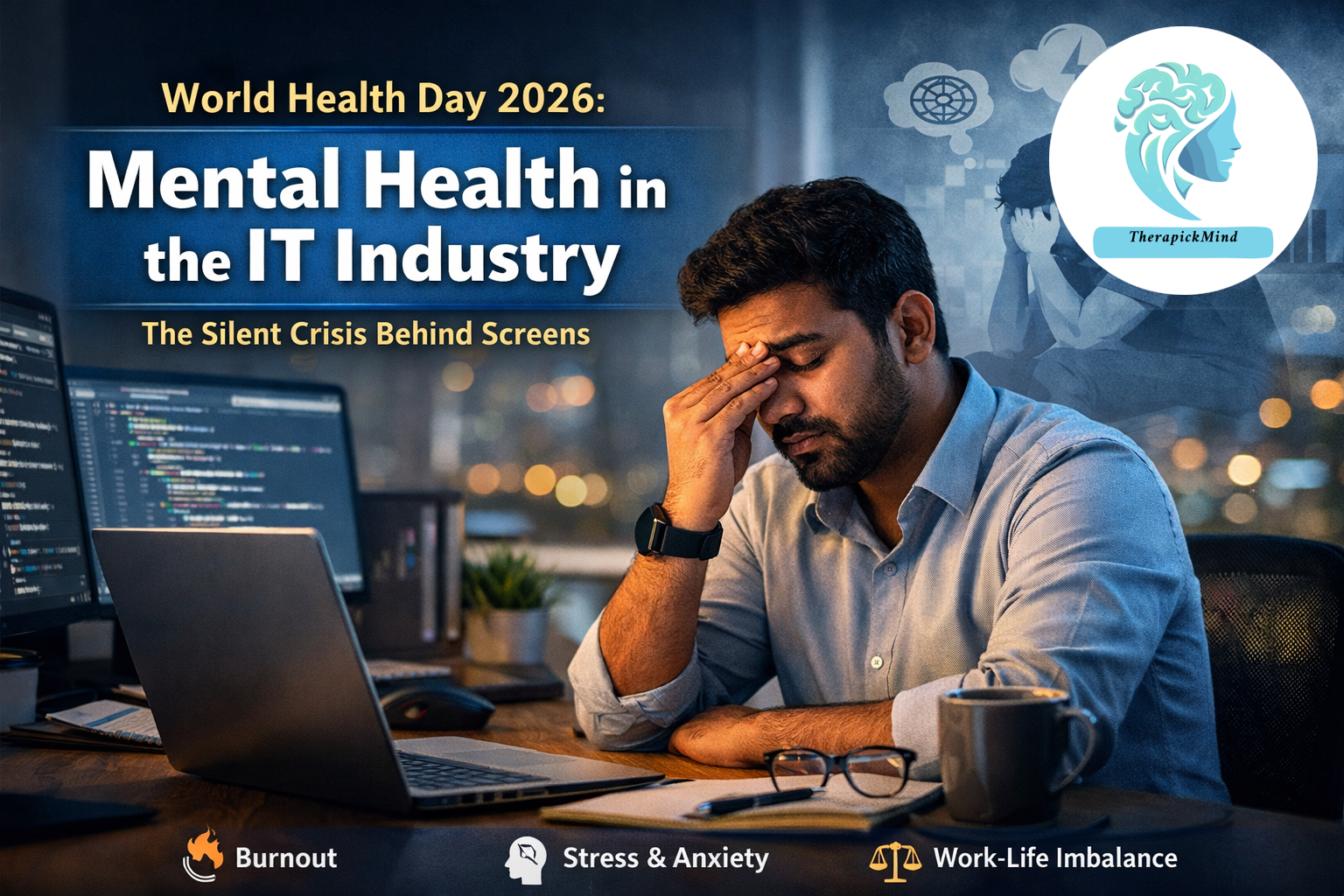
World Health Day 2026: Mental Health in the IT Industry – The Silent Crisis Behind Screens
World Health Day reminds us that health is not limited to physical fitness—it includes mental and emotional wellbeing. In today’s digital era, the IT industry stands as a pillar of innovation and growth. However, behind this progress lies an often overlooked issue: the mental health of IT professionals.
Long working hours, constant deadlines, and high expectations have created a work culture where stress is normalized and emotional wellbeing is frequently ignored. This World Health Day, it is important to shed light on this silent crisis.
The Reality of IT Work Culture
The IT sector is fast-paced and demanding. Professionals are expected to continuously upskill, meet tight deadlines, and maintain high performance.
Common challenges include:
- Extended screen time and sedentary lifestyle
- Night shifts affecting biological rhythms
- High performance pressure
- Difficulty maintaining work-life balance
With remote work becoming more common, the boundary between personal and professional life has blurred, leading to increased mental fatigue.
Recognizing the Warning Signs
Mental health issues often develop gradually and may go unnoticed. Many IT employees consider stress as a normal part of their job, delaying intervention.
Key warning signs include:
- Constant fatigue and low energy
- Difficulty focusing or making decisions
- Irritability and mood fluctuations
- Sleep disturbances
- Reduced interest in work
Ignoring these signs can lead to more severe conditions such as anxiety and depression.
Burnout: The Most Common Yet Ignored Problem
Burnout is one of the most prevalent mental health concerns in the IT industry. It results from prolonged exposure to stress without adequate recovery.
Effects of burnout include:
- Decreased productivity
- Increased errors at work
- Emotional detachment
- Loss of motivation
Over time, burnout affects both individual wellbeing and organizational performance.
Mental Health and Work Performance
A healthy mind is directly linked to better performance. Employees with good mental health demonstrate:
- Improved concentration
- Better problem-solving skills
- Higher creativity
- Effective teamwork
In contrast, poor mental health can reduce efficiency, increase absenteeism, and affect overall workplace morale.
Steps IT Professionals Can Take
Small lifestyle changes can significantly improve mental wellbeing:
- Set clear boundaries between work and personal time
- Take regular breaks to reduce screen fatigue
- Maintain proper sleep hygiene
- Engage in physical activity or relaxation techniques
- Stay socially connected
Seeking professional help when needed is a sign of strength, not weakness.
The Role of Organizations
Organizations must actively support employee mental health by:
- Providing access to counselling services
- Conducting mental health awareness programs
- Encouraging work-life balance
- Building a psychologically safe work environment
Employee wellbeing should be seen as a long-term investment rather than an optional benefit.
How TherapickMind Supports IT Professionals
TherapickMind offers structured mental health solutions tailored for individuals and organizations, including:
- Confidential counselling sessions
- Stress and burnout management programs
- Emotional wellbeing workshops
- Corporate mental health support systems
Our goal is to create healthier individuals and more productive workplaces.
This World Health Day, let us acknowledge that mental health is essential for overall wellbeing. The IT industry must recognize the silent struggles behind screens and take meaningful steps toward change.
Because when mental health is prioritized, individuals thrive—and so do organizations.